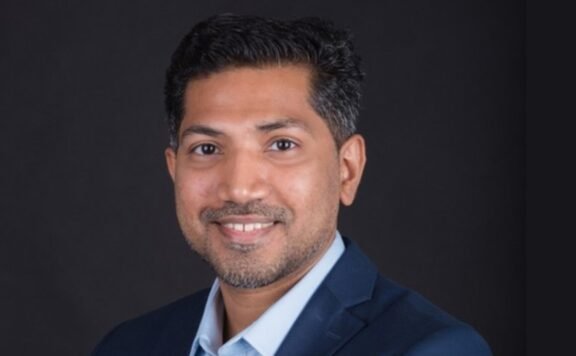



Sergei Kostevitch, CTO of ASBIS Group, discusses the company’s journey in robotics innovation—from creating Robo Café to developing industrial cleaning robots—emphasising automation, AI integration, and sustainable, scalable technology solutions.
Sergei, you lead innovation at ASBIS. How did the idea for Robo Café begin?
Honestly, it started with a personal love for coffee—mine and my mother’s. But on a professional level, we saw a gap in the market. Global coffee chains struggled to find skilled baristas who could consistently deliver high-quality coffee across their locations. Therefore, we decided to develop a robotic solution that ensures consistency, speed, and premium quality, without relying entirely on human availability. We explored various machines worldwide, from China to Canada, but found them to be either overpriced or unstable. We built our own, collaborating with top coffee brands like Gloria Jean’s and Lavazza, and utilising Victoria Arduino machines, the heart of true espresso-making.
What makes Robo Café different from typical vending or automated machines?
The difference lies in the quality and the experience. This isn’t just pushing a button for coffee—it’s a performance. You can see the robotic arm grind, tamp, and brew the espresso with precision. It’s fully automated, but the outcome is premium café-grade coffee. We designed it to run 24/7 with large capacity and flexibility for multiple coffee types, milk variations, and consistent taste. The goal was always to merge technology with human-like craftsmanship.
How has the market responded, particularly in regions such as the Middle East?
The response has been overwhelming. We operate in Cyprus, Poland, and Dubai, and are now expanding our manufacturing presence in the Middle East to cater to the region locally. In Cyprus, I even run a few cafés myself to collect feedback directly from customers. That helps us refine the product further. Here, strong brands want to partner with us rather than compete, and that’s how we prefer to work—combining expertise rather than trying to do everything alone.
What’s next for Robo Café? Will we see delivery robots or more automation soon?
Absolutely. We’re already testing delivery robots that can grab your coffee and bring it straight to your table. The next rollout is planned for mid-next year. We’re also expanding our menu—cookies, donuts, and snacks are coming soon. The idea is to make the entire café experience automated yet enjoyable.
ASBIS is also involved in other robotics projects. Can you share more?
Yes, beyond hospitality, we’re heavily invested in industrial robotics. We’ve developed cleaning robots capable of covering 30,000 square meters per run, both indoors and outdoors. They’ve been tested in the Dubai heat, reaching up to 52 degrees, and performed exceptionally well. These robots are designed for facility management, airports, malls, and large campuses. It’s part of our vision to make robotics a practical tool for real-world environments.
How much do AI and IoT play into these systems?
A lot. Our robots have over 1,000 sensors that collect and transmit data constantly. IoT enables machine-to-machine communication, while AI helps optimise operations and detect issues before they occur. We started working on smart home and IoT solutions years ago, and now it’s evolved naturally into robotics. The technology is mature, but proper integration and expertise are still key—automation isn’t plug-and-play for everyone.
Security is always a concern in connected systems. How safe are these robots?
Extremely safe. We’ve built several security layers, both physical and digital. The system is ISO 27001 certified and compliant with the GDPR. Updates to the robotic arms are only done manually—never remotely—to prevent unauthorised access. We also tested the systems internally and through external cybersecurity partners. So, safety is not just a checkbox—it’s a core design principle.
As AI advances rapidly, what role do you envision it playing in robotics and business?
AI is a tool—an incredibly powerful one—but it’s still just a tool. It’s helping us scale faster, especially in content, translations, and system automation. But ethics must remain central. We can’t rely entirely on AI judgment; human oversight is crucial. AGI isn’t here yet, and perhaps it shouldn’t be rushed. For now, AI helps humans do more, better.
How was your experience at GITEX this year?
Intense and inspiring. GITEX has become a global meeting point for innovation. I’ve been to many expos in Europe and Asia, but the energy here is unmatched. For ASBIS, it’s not just about showcasing products—it’s about building partnerships. And, of course, offering people a great cup of coffee made by our robot helps too.